27.10.2026
Post-production is the process of video processing after filming is complete, which includes handling raw footage and preparing the final video for publication. It is performed in 6 stages: footage selection and organization, rough assembly and structure approval, fine cutting, audio post-production, adding motion graphics and titles, final rendering, and export. Unlike video editing alone, which controls shot sequencing and scene pacing, post-production encompasses the entire suite of tasks required to deliver a polished video.
Most clients assume that video production ends on the last day of shooting. In reality, it is after filming that separate takes are transformed into a cohesive, impactful, and publish-ready video. Post-production includes video editing, color grading, audio mixing, adding graphics and captions, as well as encoding the final file to meet target platform specifications.
A video’s overall quality depends not only on how the shoot went, but also on how effectively post-processing is organized. For Reels and TikTok, visual dynamics, readable captions, clean audio, and vertical video adaptation are essential. To achieve a professional outcome, you can order video production from our studio.
Post-Production Explained Simply
Post-production is the final stage of video production following the shoot, during which raw video files are transformed into a finished video for publication or commercial use. While a video shoot yields a collection of individual clips and audio tracks, post-processing weaves them into a unified story.
Imagine a culinary crew gathering raw ingredients for a dish. Video editing determines the sequence of actions and combines individual elements, whereas post-production covers the entire process of bringing the result to perfection: from prep work to final presentation. Video material follows the same path: from selecting takes to exporting the finished file. Therefore, video post-production is not merely technical processing, but a critical part of shaping audience perception.
How Post-Production Differs from Video Editing
Video editing is just one stage of post-processing. It establishes shot sequencing, scene duration, narrative rhythm, and transitions. However, editing alone does not guarantee that a video will look and sound polished.
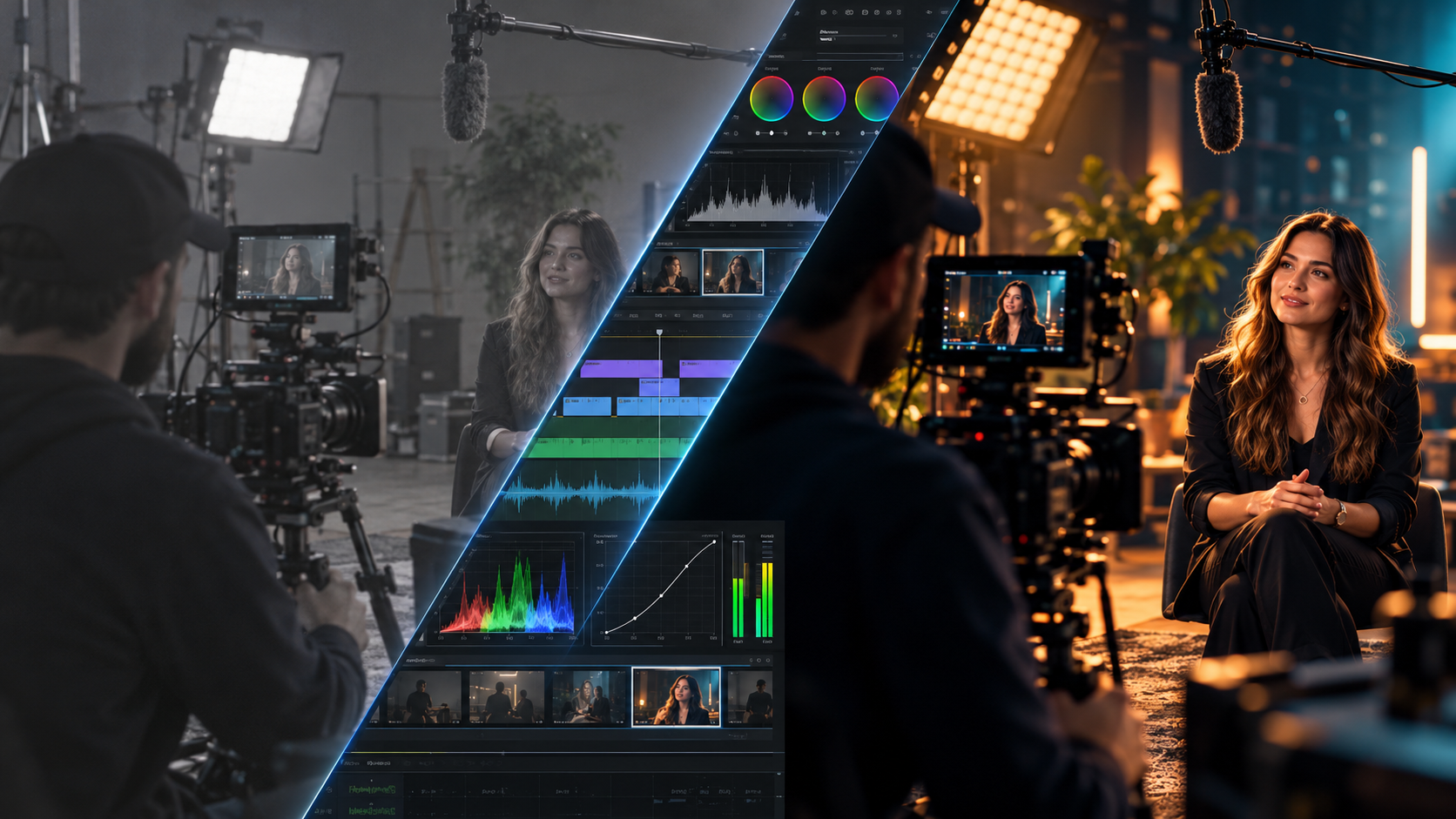
Post-production is a broader concept. It encompasses video editing, color correction, audio enhancement, motion graphics, and master file delivery. For example, even a well-edited clip can look amateurish if color temperature varies between shots, background noise muffles the dialogue, or subtitles obscure key visual elements.
Therefore, production and post-production are interconnected phases of a single workflow. Raw assets are created during production, and then processed and adapted to project goals during post-production.
Stages of Post-Production
The workflow sequence depends on project complexity, but typically includes 6 core stages:
| Post-Production Stage | Scope of Work |
| Footage selection & asset management | The editor reviews the source files, selects the best takes, and organizes them by scene. When necessary, assets are sorted into folder structures and backed up to mitigate data loss risks. |
| Rough cut & structural approval | Selected takes are assembled into an initial story timeline (rough cut). This stage defines scene order, overall video length, and key narrative points. The client can evaluate the story arc and request structural changes before detailed polish begins. |
| Fine cut | Once the structure is approved, meticulous trimming takes place: cuts are refined, awkward pauses removed, pacing tuned, and transitions applied. For short vertical videos, narrative momentum and tight pacing are critical. |
| Color correction & grading | The colorist balances brightness, contrast, and color balance across shots. Then, color grading is applied to establish a specific mood and visual brand style. |
| Audio post-production: cleaning, mixing, music & voiceover | This phase involves noise reduction, dialogue leveling, audio mixing, and music placement. Where required, sound design is applied—creating or layering sound effects that enhance on-screen impact. |
| Graphics, titles, final render & multi-platform export | Editors add captions, subtitles, motion graphics, logos, and lower thirds. For advanced projects, VFX (visual effects) and compositing—blending multiple visual layers—are performed. After QA checks, final rendering, mastering, and exporting to required codecs take place. |
Color Correction: Why It Is Essential
Color correction ensures visual consistency across footage. Even when scenes are shot on the same camera, lighting shifts and exposure settings can create inconsistencies, causing skin tones, backgrounds, and objects to vary between clips.
Color work typically involves 2 key steps:
- Primary color correction. Technical balancing of exposure, white balance, contrast, and saturation to give footage a natural, uniform look.
- Secondary color correction. Targeted adjustments to specific colors, objects, or isolated areas—such as correcting a skin tone shift or highlighting a product.
Artistic color grading serves a different purpose: it builds a recognizable atmosphere and reinforces brand aesthetics. Footage can be shifted warmer, cooler, punchier, or desaturated. However, stylized grading should never compromise readability or viewer engagement. Overall, proper video color processing maintains brand consistency across video series and enhances content recognition.
How Long Does Post-Production Take
Post-production usually takes longer than the actual shoot. Even short promotional clips require careful shot logging, audio cleanup, motion design, and multiple revision cycles.
Estimated timelines depend on raw asset volume and project scope:
- simple video with basic editing – from a few hours to 1 business day;
- Reels or TikTok clips with captions, music, and color grading – 1–2 business days;
- videos with custom animation, complex motion graphics, or VFX – 3+ business days;
- branded video series in a unified style – several business days depending on volume.
Final turnaround times are influenced by raw footage volume, recording quality, visual effects complexity, graphics workload, and feedback speed. Requesting structural re-cuts after fine editing will add production time.
What Is Required from the Client
To ensure post-production proceeds without unnecessary delays, clients should define the video goal, target audience, distribution channels, and creative expectations upfront. Providing a reference video that conveys desired pacing, tone, or style is highly beneficial. Specify which elements to draw inspiration from: color scheme, transition style, soundtrack, or messaging structure.
Clients are also encouraged to:
- provide timely feedback on rough cut drafts;
- consolidate all revision notes into a single document using timecodes;
- approve core video structure during the rough cut stage.
If you want to order turn-key full-service video production, trust our studio. We manage the entire production cycle: from concept development to final master file delivery.
Common Post-Production Mistakes
To achieve high-quality results during post-production, avoid these common pitfalls:
- Sending piecemeal feedback. Fragmented notes complicate project management and extend timeline revisions. Consolidate notes into one document.
- Changing video structure after fine editing. Reordering scenes late in the workflow forces rework on audio mixing, title sync, and motion graphics.
- Skimping on audio quality. Background noise, quiet dialogue, or unbalanced background music degrade perception—even with great visuals.
- Ignoring platform-specific adaptations. Account for vertical aspect ratios, platform UI overlays, text legibility, and technical file requirements.
- Neglecting source file backup. Maintaining raw camera files and backups ensures you can revisit assets, make future edits, or generate new cuts without re-shooting.
When preparing commercial corporate video content, establishing technical and creative specifications prior to production is especially critical.
Conclusion
Video post-production is a comprehensive workflow that turns raw footage into a polished final asset. It extends far beyond editing to encompass color grading, audio engineering, motion graphics, subtitling, and multi-format exporting.
Delivering high-impact video results requires thoughtful filming, structured post-processing, and timely collaborative feedback. Post-production is not merely a formality at the end of a shoot—it is a core phase of successful video creation.
 27.10.2026
 7 min